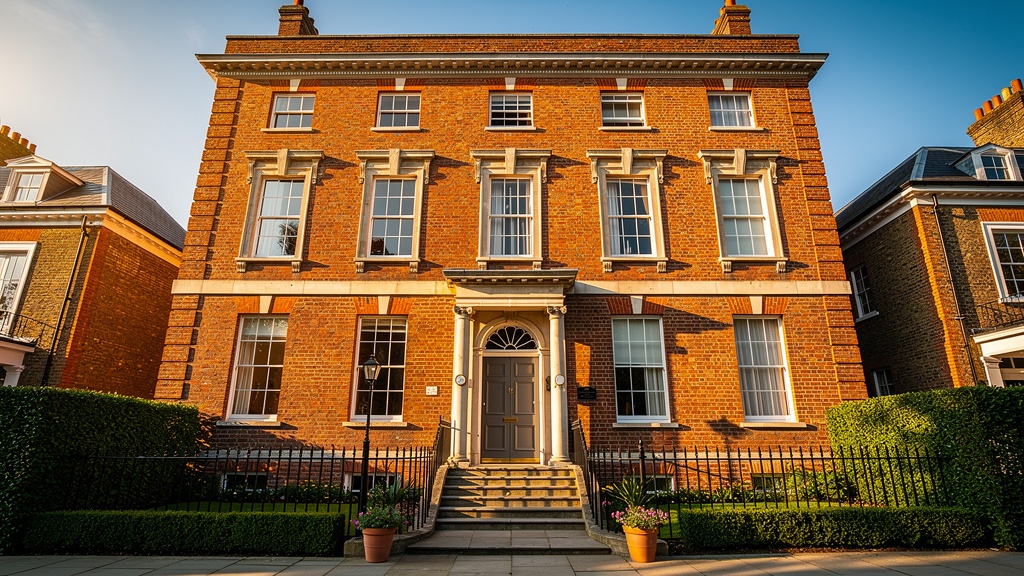
There's something deeply appealing about a period home. The high ceilings. The original floorboards. The way a Victorian bay window fills a room with light. I understand the pull completely — I've been surveying them for over two decades, and I still find them endlessly interesting. But I've also seen what happens when buyers fall in love before they understand what they're taking on.
Period properties require a RICS Level 3 building survey. Full stop. If anyone tells you otherwise — a Level 2 homebuyer report, a quick online check, a "builder's opinion" — please be cautious. Victorian and Edwardian homes were built using methods and materials that are genuinely different from modern construction, and those differences matter when you're assessing condition.
Why Period Properties Are Different
Modern homes are built with cavity walls, damp-proof courses, treated timber and insulated roofs. Victorian and Edwardian homes were not. They relied on different principles — thick solid walls that absorbed and evaporated moisture, breathable lime mortar and plaster, and natural ventilation. The key word is breathable.
When modern materials and methods are applied to period buildings without understanding this, problems arise. Cement repointing traps moisture in solid walls. Impermeable internal plasters cause salts to crystallise and plaster to spall. Non-breathable paints and coatings create condensation problems within the wall structure itself.
A good Level 3 surveyor understands the building's original design intent — and can spot where that design has been compromised by well-meaning but inappropriate interventions.
What We Look For: A Walk Through a Period Property Survey
The Roof
We start at the top. Victorian and Edwardian properties typically have natural slate or clay tile roofs — beautiful, durable materials that can last 100 years or more when well-maintained. But that "when" is doing a lot of work. Key issues include:
- Slipped, cracked or missing slates or tiles
- Deteriorated lead flashings at chimney bases, valleys and abutments
- Failed or inadequate chimney pointing (chimneys are among the most common source of water ingress)
- Condition of the roof structure — ridge boards, rafters and purlins — particularly relevant where there's been water ingress
- Insulation and ventilation in the roof space
For accessible roof spaces, we go in. Every time. The things hidden in roof spaces — woodworm, wet rot, evidence of historic water ingress, jury-rigged structural repairs — are often the most revealing findings of the entire survey.
The Walls
Most Victorian and Edwardian homes have solid brick walls — typically 230mm thick. These walls work differently from modern cavity construction. They breathe. They absorb. They work best when maintained with lime-based mortars and plasters.
We assess the walls carefully for signs of:
- Penetrating damp — often identifiable by tide marks on internal plaster surfaces
- Rising damp — where ground-level moisture travels up through the wall base
- Structural cracking — the direction, pattern and width of cracks tells us a great deal about their cause
- Inappropriate repointing with hard cement mortar
- Render condition (where rendered) and any evidence of bulging or cracking
Ground Floors and Cellars
Many Victorian homes have suspended timber ground floors — boards over joists, with a void beneath. This void needs ventilation to prevent rot and woodworm. Blocked air bricks are one of the most common findings in period properties, and the consequences (wet rot in floor joists) can be expensive to remedy.
Where cellars exist — and they're not uncommon in larger Victorian homes in the Surrey area — we inspect them thoroughly. Tanking condition, evidence of water ingress, structural integrity and access quality are all assessed.
The Services
Electrical wiring and plumbing in period homes can date from any era. We assess what's visible and flag any evidence of old wiring systems (particularly old rubber-insulated cables or ungrounded circuits) and aging plumbing materials. We always recommend specialist electrical and plumbing inspections where the services appear old or inadequate.
"The buyers of a Victorian semi in Surbiton were planning a kitchen extension. Our Level 3 survey found that a load-bearing breast in the rear ground floor room had been removed — without any structural support — at some point in the last 20 years. The ceiling was being held up by the wall above rather than anything structural. Cost to remedy: around £8,000. It would have been far more complicated if they'd knocked through the back wall without knowing."
The Report
A Level 3 report on a period property is a substantial document. It will describe the construction method, assess each element in detail, explain defects in plain English, indicate likely causes and suggest remediation options. We also provide indicative cost guidance where we can — not a formal contractor quote, but enough to help you understand the scale of what's involved.
After the report is delivered, we speak with every client. A Level 3 survey can cover a lot of ground and it's important you understand what's significant, what's manageable, and what — if anything — might be a deal-breaker.
Frequently Asked Questions
Buying a Period Property in Esher or Surrey?
Our senior building surveyor Robert specialises in complex Level 3 surveys on older properties. Get a free quote today.
Get a Level 3 QuoteRead more in our related guides: Level 2 vs Level 3 Surveys | Roof Surveys Explained | Our Level 3 Survey Service