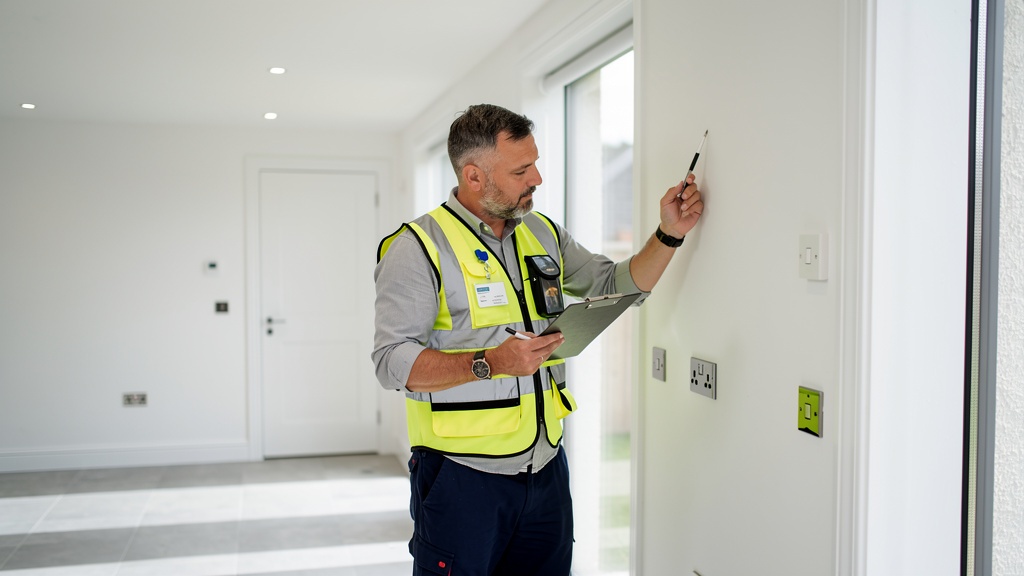
New build properties are sold on the premise of a fresh start: modern layout, good energy efficiency, minimal maintenance, and no chain. These are genuine advantages. What is less commonly discussed is that new build homes in the UK have a persistent quality problem. Independent research, consumer surveys and the work of organisations such as the Home Builders Federation's own New Homes Quality Board consistently reveal that a significant proportion of new homes are handed over with dozens — sometimes hundreds — of defects.
At Esher Surveyors, our surveyors carry out new build snagging inspections across Surrey, including on developments in Esher, Cobham, Surbiton, Walton-on-Thames and the wider Elmbridge area. This guide explains what a snagging survey involves, the most common defects we find, and how to use the inspection process to hold your developer to account.
What Is a New Build Snagging Survey?
A new build snagging survey is a detailed inspection of a newly constructed property carried out by an independent, qualified professional — typically a surveyor or a specialist snagging inspector. It goes through the property room by room, checking the quality of construction and finish against industry standards (principally the NHBC's Technical Standards) and the developer's own specification.
The output is a formal snagging list — a detailed report with photographs itemising every defect found, from paint scuffs to improperly installed roof membranes. This report is then presented to the developer, who is responsible for remedying the defects before (or shortly after) you take legal ownership.
When Should You Book a Snagging Survey?
The ideal window for a snagging survey is after the developer has declared the property ready for occupation but before legal completion. In this window, the developer is contractually obliged to fix defects before the keys are handed over. It places maximum pressure on the developer and protects you most effectively.
In practice, developers often try to rush buyers to exchange and complete quickly — sometimes pressuring buyers to complete before a proper inspection. Do not be rushed. You are making one of the largest financial commitments of your life, and you have every right to a reasonable period for inspection.
If you have already completed, a snagging survey is still worthwhile. Under the NHBC Buildmark warranty (or equivalent from other warranty providers), the developer remains responsible for remedying defects reported in years 1 and 2 of ownership. Many buyers discover significant additional defects during the first winter — particularly relating to drainage, heating systems and condensation — and a formal snagging report strengthens your position when pursuing the developer.
What Does a Snagging Survey Cover?
Our snagging surveys at Esher Surveyors cover every accessible area of the property, from the roof structure (where accessible via the loft hatch) to the drainage and external finishes. A typical snagging inspection includes:
Structural and Construction Quality
- Roof structure, felt, battens and tiles (where accessible from loft hatch)
- Masonry quality — brick courses, pointing, cavity wall construction
- Lintels above openings — correct sizing, installation and protection
- Structural connections and fixings
- Evidence of any movement or settlement cracking (particularly in blockwork)
External Works and Drainage
- External render, cladding and masonry condition
- Window and door installation — correct flashings, sealant, drainage channels
- Drainage falls and connections — soakaways, drains and gullies
- Hard landscaping — paths, driveways and boundary walls
- Roof drainage — gutters, downpipes and soil stacks
Internal Finishes
- Plastering — straightness of walls, internal angles, quality of finish
- Painting and decorating — missed areas, poor coverage, runs, wrong colours
- Floor coverings — levelling of screed, tile alignment, carpet fitting
- Joinery — fitting and alignment of doors, skirtings, architraves and staircase
- Bathroom and kitchen — tile alignment, grouting, silicone sealing, fitting quality
- Plumbing — correct connections, test of all taps, showers and WCs
- Electrical — test of sockets, switches, lights and consumer unit
- Ventilation — presence and function of extract fans in kitchens and bathrooms
- Insulation — where accessible, particularly in loft spaces
The Most Common Defects Found in Surrey New Builds
Based on our snagging surveys across Surrey, here are the most frequently occurring defects by category:
Decoration and Finishing (Very Common)
This category is almost universally present in new builds and accounts for the largest number of items on a typical snagging list. Paint scrapes and scuffs from the fitting trades, inconsistent paint coverage on walls and ceilings, missed areas (particularly above high windows and inside fitted wardrobes), poorly cut-in paint lines, and drips or runs. While individually minor, a large number of decoration defects collectively represent several days of remediation work for the developer.
Door and Window Issues
Doors that do not hang correctly, fail to latch without force, or show gaps around the frame are among the most common serious snagging items. In new builds, these often indicate issues with frame installation, structural settling of the new building, or sub-standard joinery work. Window issues include failed or missing gaskets, incorrect drainage of window reveals and — in some cases — windows that do not open or close smoothly.
Plumbing and Water Management
Bathroom and kitchen installations generate a disproportionate number of snags. Missing or inadequate silicone sealing around baths, showers and basins is extremely common and — left unaddressed — allows water to penetrate behind tiling with costly consequences. Grout that has not been properly applied or finished, inadequate falls on shower trays and insufficient ventilation in bathrooms round out the most common plumbing-related issues.
External Drainage and Landscaping
External drainage is frequently poorly specified or incorrectly installed on new developments. This becomes apparent in the first winter when gardens flood, gullies overflow or driveways fail to drain properly. We also regularly find incomplete or defective hard landscaping — missing kerb stones, cracked paths laid without expansion joints, and retaining walls that are under-engineered.
Energy Performance and Ventilation
New builds in the UK are built to increasingly high energy performance standards, but the gap between the theoretical EPC rating and real-world performance can be significant. Missing or incorrectly installed insulation (particularly to internal service ducts, pipe runs and loft areas), failed air-tightness membranes, and inadequate mechanical ventilation (in high air-tightness builds, extract ventilation is critical) are all issues we encounter.
Structural and Workmanship Concerns (Less Common but Serious)
While major structural defects are relatively rare, we do encounter them. These include: masonry lintels with insufficient bearing at their ends, roof timber connections that do not meet NHBC Standards, floor joist spans that exceed permissible limits, and drainage gradients that are insufficient. These are Condition 3 items in our reports and require urgent developer response.
How to Use Your Snagging Report
Once you have received your snagging report from Esher Surveyors, the process is as follows:
- Present the report to your developer formally. Send it in writing — by email or recorded letter — so you have a paper trail. Ask for written acknowledgement and a timetable for remediation.
- Do not complete until critical items are addressed. If your survey identifies significant structural or workmanship defects, your solicitor should advise on whether it is appropriate to delay legal completion pending resolution.
- For post-completion snags, submit the list to the developer's customer care team in writing, referencing the NHBC Buildmark warranty. The developer has a defined timeline (typically 30 days) to respond and a further period to carry out works.
- Escalate if necessary. If the developer fails to respond or disputes findings, the NHBC Resolution Service provides a free dispute resolution service for warranty disputes. Your solicitor can advise on further legal options if the developer remains uncooperative.
Is a Snagging Survey Worth the Cost?
The short answer is almost always yes. The average new build snagging survey costs a few hundred pounds. The average remediation cost for the defects we identify — if the buyer had to pay for them rather than the developer — would typically be several thousand pounds. Getting the developer to fix problems before or shortly after completion is far less disruptive and less expensive than dealing with them years later.
More fundamentally, a snagging survey sends a clear message to the developer that you are an informed, organised buyer who will hold them to the standards they are legally and contractually required to meet. In our experience, developers respond significantly more promptly to buyers who present formal professional snagging reports than to those who raise verbal complaints.
Booking a Snagging Survey with Esher Surveyors
Our team at Esher Surveyors carries out new build snagging inspections across Surrey, covering all property types from studio apartments to large detached family homes. We produce detailed, photographically illustrated snagging reports that are formatted to make them easy to present to your developer's customer care team.
We are independent from all developers and housebuilders — our obligation is entirely to you as our client. To book a snagging survey or request a free, no-obligation quote, please contact us here.
Frequently Asked Questions About New Build Snagging Surveys
What is a new build snagging survey?
A new build snagging survey is a detailed inspection of a newly constructed property, carried out by an independent surveyor before legal completion. It identifies defects in the build and produces a formal snagging list that you can present to the developer for remediation at no cost to you.
When should I book a snagging survey for a new build?
Ideally, book a snagging survey after the property has been released by the developer for inspection but before legal completion. This means the developer is contractually obliged to remedy defects before you take ownership. Post-completion surveys are still worthwhile within the first two years under the NHBC warranty.
How many snags does the average new build have?
Studies consistently find that new build properties in the UK have on average 100–150 defects at the time of completion. Our snagging surveys for Surrey new builds typically identify between 80 and 200 items, ranging from minor cosmetic issues to genuine workmanship concerns.
Does the NHBC warranty cover everything?
No. In years 1–2, the developer is responsible for fixing defects that do not meet NHBC Technical Standards. From years 3–10, the warranty provides insurance cover for major structural defects only. It does not cover general wear and tear, cosmetic issues or defects reported after the two-year period.
Can the developer stop me having a snagging survey?
Developers cannot legally prevent you from commissioning an independent snagging survey. The government reaffirmed in 2022 that buyers have the right to commission independent inspections before legal completion. If a developer refuses access, raise this with your solicitor immediately.
What is the difference between a snagging survey and a RICS survey?
A RICS Home Survey is designed for existing properties and focuses on condition relative to age and type. A snagging survey is specifically designed for new builds and assesses construction quality and finish against NHBC Technical Standards and the developer's specification. Esher Surveyors can carry out both types.
Buying a New Build in Surrey? Book a Snagging Survey First
Our independent surveyors carry out thorough, photographically documented snagging inspections across Surrey. We are entirely independent from developers and housebuilders — our loyalty is to you.
Book a Snagging Survey All Survey ServicesSources: NHBC Buildmark Warranty Guidance 2023; New Homes Quality Board Code of Practice 2022; HBF/NHBC New Homes Customer Satisfaction Survey 2024; Housing, Communities and Local Government: Extending the Consumer Code to New Build Homes.