
In my 20-plus years as a building surveyor — much of them spent serving homeowners across Esher, Claygate, Surbiton and the wider Surrey area — few topics generate as much anxiety as the Party Wall Act. And I understand why. The legislation sounds complex, the notices look official, and disputes with neighbours can feel deeply personal.
The good news? The Party Wall Act 1996 is actually a sensible, well-designed piece of legislation. When followed properly, it protects everyone involved — the person carrying out the works and the neighbour next door. This guide will walk you through how it works, step by step, in plain English.
What Is the Party Wall Act?
The Party Wall Act 1996 came into force in England and Wales in 1997. It governs three main types of work:
- Work on or near a shared wall — including cutting into the wall, raising the height, or underpinning it
- New walls on or at the boundary — such as boundary walls or new walls built astride the property line
- Excavation near the boundary — digging within 3 or 6 metres of a neighbouring building (depending on the depth and type of foundation)
The most common scenarios our party wall surveyors in Esher deal with are rear extensions (excavations and wall works), loft conversions (cutting into a shared gable wall), and basement conversions (deep excavations near neighbouring foundations).
Does the Party Wall Act Apply to You?
The Act applies to anyone who plans to carry out the above types of work — whether you're a building owner or a freeholder. It applies regardless of whether you have planning permission or building regulations approval. Those are separate processes.
If you live in a terraced or semi-detached home in Surrey — which describes a very large proportion of the housing stock in Surbiton, Claygate and Thames Ditton — the Act is almost certainly relevant to any extension or structural work you're planning.
Step 1: Serve a Party Wall Notice
The first step is to serve a formal Party Wall Notice on your adjoining owner(s). The notice must be given in writing and must specify what work you intend to carry out and when. The timeframe for serving notices depends on the type of work:
- Two months before works begin — for most structural works and excavations within 3 metres
- One month before works begin — for new walls at the line of junction
The notice must include your name and address, a description of the proposed work, and the date you intend to start. We can prepare and serve notices on your behalf — this is one of our most commonly requested services for Surrey homeowners.
Step 2: Your Neighbour's Response
Once your neighbour receives the notice, they have 14 days to respond. There are two possible outcomes:
- Consent: Your neighbour agrees to the works. You can proceed, but a schedule of condition is still advisable to record the existing state of their property.
- Dissent (or no response): A dispute is deemed to have arisen. A surveyor (or surveyors) must be appointed to resolve the matter via a Party Wall Award.
It's worth noting that a dissent isn't necessarily hostile. Many neighbours dissent simply because they want the formal protection that a Party Wall Award provides. It's a legal safeguard, not a fight.
Step 3: The Party Wall Award
When a dissent occurs, both parties appoint surveyors. If both sides agree, they can appoint a single agreed surveyor — which keeps costs down and speeds up the process. Alternatively, each party appoints their own surveyor, who then work together to produce the Award.
The Party Wall Award is a legally binding document that sets out:
- What works are permitted and how they must be carried out
- Access rights for inspection during works
- Security for expenses (if applicable)
- The rights and obligations of both parties
Typically, the building owner pays the costs of the party wall process, including the adjoining owner's surveyor fees. This is worth factoring into your renovation budget.
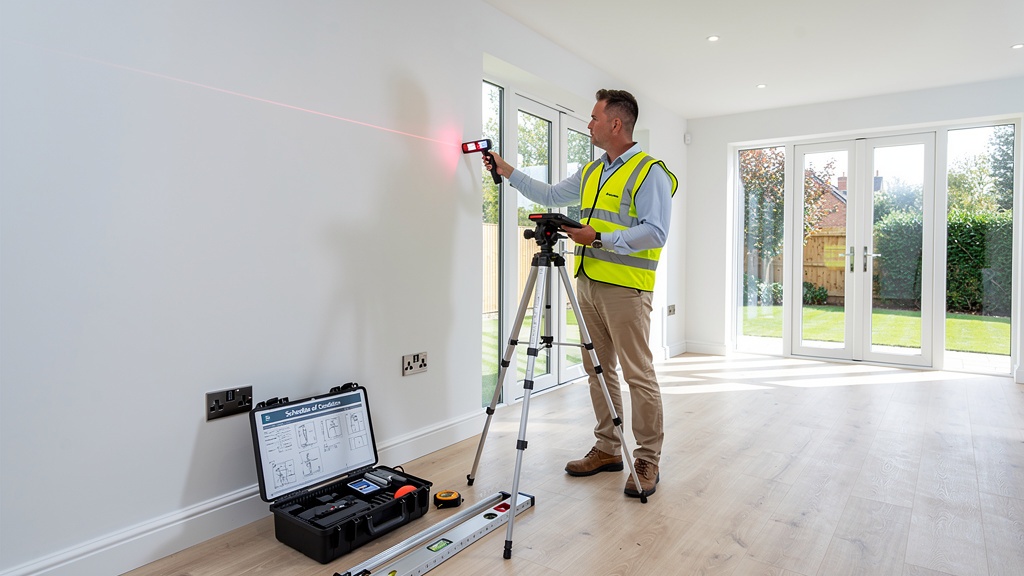
The Schedule of Condition
Before any work begins, a thorough photographic and written record of the adjoining property's condition should be made. This is called a schedule of condition, and it's essential protection for both parties.
If a dispute arises later about whether cracking or damage was caused by the works, the schedule of condition is the definitive reference document. Without one, it can be very difficult to prove — or disprove — a claim. Read more in our dedicated guide: What Is a Schedule of Condition?
"I've handled hundreds of party wall matters over the years. The cases that end badly are almost always the ones where someone skipped the notice stage, assumed their neighbour wouldn't mind, and then found themselves facing a court injunction mid-construction."
Common Mistakes Surrey Homeowners Make
- Not serving a notice at all. This is the most common and costly mistake. If work begins without notice, your neighbour can apply for an injunction to stop the works.
- Serving the notice too late. Remember the two-month or one-month minimum — plan ahead.
- Not getting a schedule of condition. Even when your neighbour consents, a condition record protects you both.
- Assuming a friendly relationship means the Act doesn't apply. It always applies, regardless of your relationship with your neighbour.
Frequently Asked Questions
Need a Party Wall Surveyor in Esher or Surrey?
Our team handles party wall notices, schedules of condition and Party Wall Awards across the Elmbridge area. Get in touch for a free, no-obligation discussion.
Contact Us TodayFor more on our party wall services, visit our Party Wall Surveying page. You might also find our guide to schedules of condition useful reading.